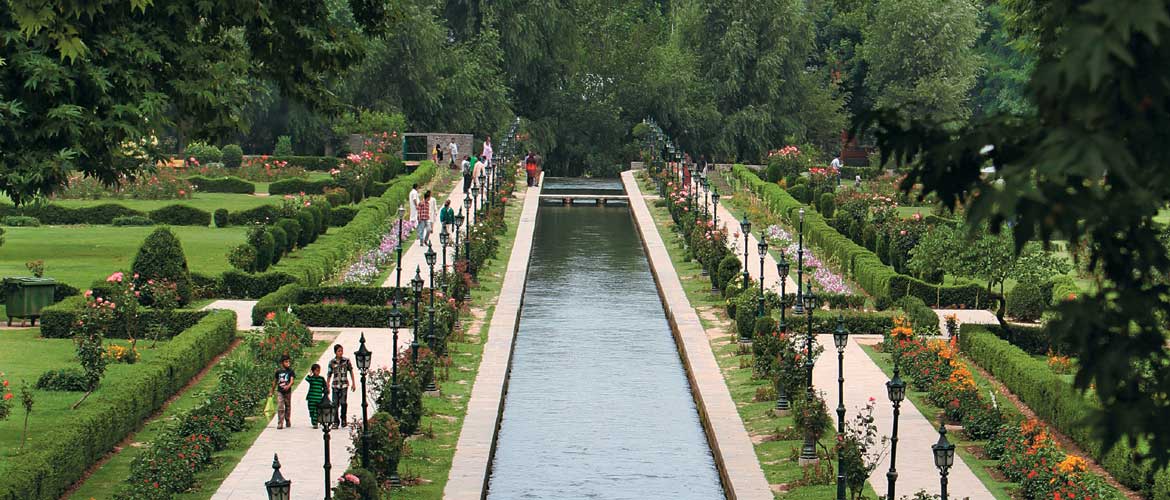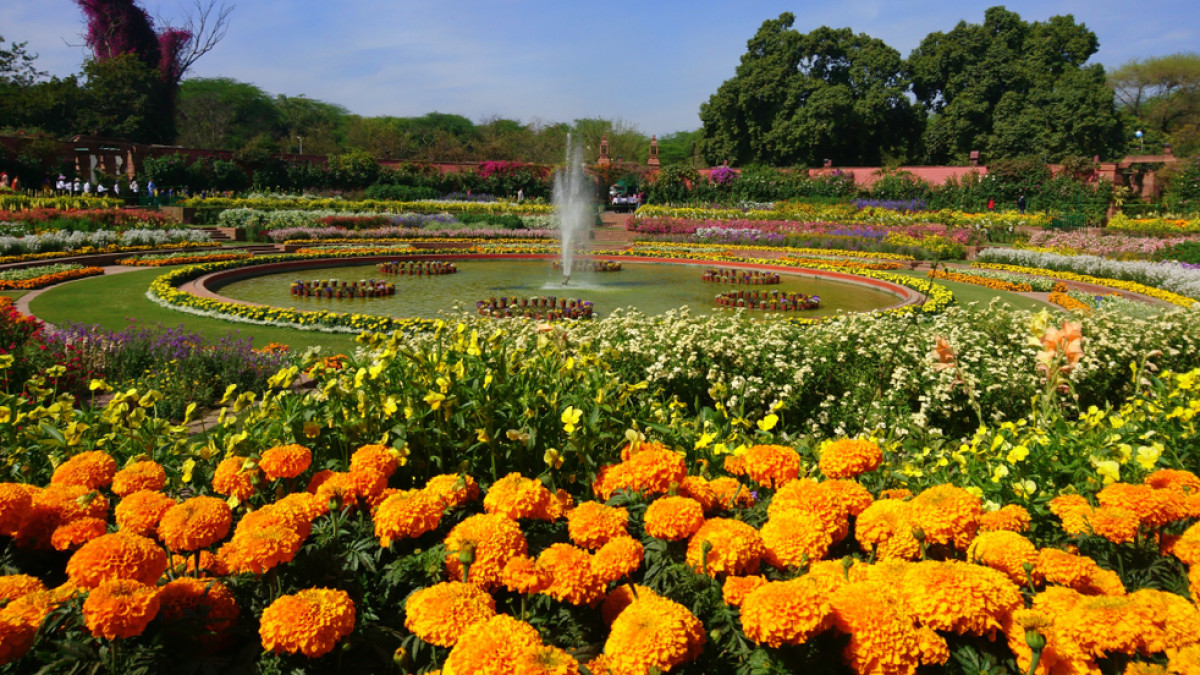
Key features of Mughal Gardens include: Terraced Layout: Mughal Gardens typically have a terraced layout, with a series of ascending levels or terraces that are often aligned with a central axis. The terraces create a sense of depth and grandeur. Water Features: Water is a central element in Mughal Gardens. The gardens are often adorned with flowing water channels, fountains, and reflective pools. These water features not only add to the aesthetic beauty but also help cool the surroundings. Symmetry and Geometry: Mughal Gardens are known for their meticulous symmetry and geometric patterns. The layout and design elements are often meticulously planned and executed to create a harmonious and balanced visual appeal. Pavilions and Structures: Various pavilions, gazebos, and other architectural structures are placed strategically within Mughal Gardens. These structures serve as resting places, viewpoints, and are often beautifully adorned with intricate decorative elements. Floral Diversity: Mughal Gardens showcase a wide variety of plants and flowers. The gardens are meticulously landscaped with an assortment of ornamental plants, shrubs, trees, and fragrant flowers that bloom in different seasons, creating a colorful and ever-changing landscape. Perimeter Walls and Gates: Mughal Gardens are often enclosed by high walls, offering a sense of seclusion and privacy. Grand gateways provide entrance points to the gardens and are usually adorned with decorative motifs. One of the most famous examples of Mughal Gardens is the Shalimar Bagh in Srinagar, Kashmir, built by Emperor Jahangir in the 17th century. The Taj Mahal in Agra is also surrounded by elegant Mughal Gardens that add to the beauty of the monument. Mughal Garden design has had a lasting influence on landscape architecture not only in India but also across the world. The integration of water, greenery, and architectural elements in a harmonious way continues to inspire garden designers and landscape architects to this day.